torch allclose
torch cat
torch expand
torch from_numpy
torch gather
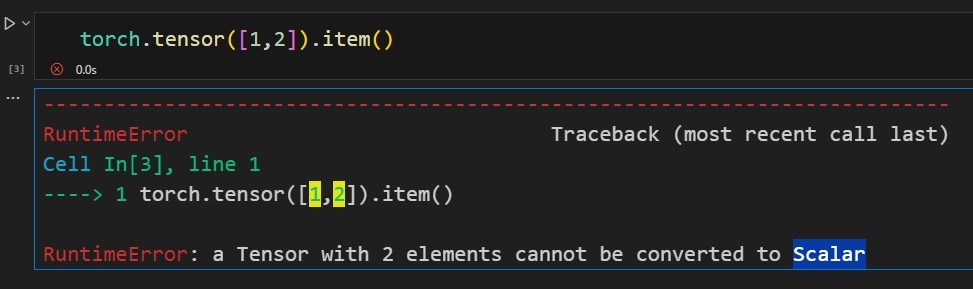
torch item
torch linspace
torch log
torch masked_select
torch masked_fill_
torch max
torch rand
torch repeat
torch round
torch stack
torch.softmax
torch sort
torch squeeze
torch topk
torch topk
torch tril
torch triu
torch unsqueeze
torch zeros
torch 随机数
参考
torch allclose
参数必须是tensor
import torch
a=torch.tensor(1e-08,dtype=torch.float32)
b=torch.tensor(0,dtype=torch.float32)
torch.allclose(a,b)
torch cat
import torch
a = torch.arange(6).reshape(2,3)
b = torch.arange(6).reshape(2,3)
torch.cat((a,b),dim=0)

tensor([[0, 1, 2],
        [3, 4, 5],
        [0, 1, 2],
        [3, 4, 5]])
torch expand
|
### 从一个维度扩展到多维度
```
import torch
torch.manual_seed(73)
a = torch.rand(5)
a
tensor([0.5286, 0.1616, 0.8870, 0.6216, 0.0459])
a.expand(5,5)
tensor([[0.5286, 0.1616, 0.8870, 0.6216, 0.0459],
[0.5286, 0.1616, 0.8870, 0.6216, 0.0459],
[0.5286, 0.1616, 0.8870, 0.6216, 0.0459],
[0.5286, 0.1616, 0.8870, 0.6216, 0.0459],
[0.5286, 0.1616, 0.8870, 0.6216, 0.0459]])
a.expand(2,5,5)
tensor([[[0.5286, 0.1616, 0.8870, 0.6216, 0.0459],
[0.5286, 0.1616, 0.8870, 0.6216, 0.0459],
[0.5286, 0.1616, 0.8870, 0.6216, 0.0459],
[0.5286, 0.1616, 0.8870, 0.6216, 0.0459],
[0.5286, 0.1616, 0.8870, 0.6216, 0.0459]],
[[0.5286, 0.1616, 0.8870, 0.6216, 0.0459],
[0.5286, 0.1616, 0.8870, 0.6216, 0.0459],
[0.5286, 0.1616, 0.8870, 0.6216, 0.0459],
[0.5286, 0.1616, 0.8870, 0.6216, 0.0459],
[0.5286, 0.1616, 0.8870, 0.6216, 0.0459]]])
```
|
|
### 从多维扩展到多维
shape是多维度,但数据仍是只有一个向量
```
a = torch.rand(1,5)
a
tensor([[0.3856, 0.2258, 0.7837, 0.2052, 0.1868]])
b=a.expand(5,5)
b
tensor([[0.3856, 0.2258, 0.7837, 0.2052, 0.1868],
[0.3856, 0.2258, 0.7837, 0.2052, 0.1868],
[0.3856, 0.2258, 0.7837, 0.2052, 0.1868],
[0.3856, 0.2258, 0.7837, 0.2052, 0.1868],
[0.3856, 0.2258, 0.7837, 0.2052, 0.1868]])
a = torch.rand(1,1,1,5)
a
tensor([[[[0.9023, 0.9923, 0.4589, 0.7409, 0.4562]]]])
c = a.expand(-1,-1,5,5)
c
tensor([[[[0.9023, 0.9923, 0.4589, 0.7409, 0.4562],
[0.9023, 0.9923, 0.4589, 0.7409, 0.4562],
[0.9023, 0.9923, 0.4589, 0.7409, 0.4562],
[0.9023, 0.9923, 0.4589, 0.7409, 0.4562],
[0.9023, 0.9923, 0.4589, 0.7409, 0.4562]]]])
c = a.expand(1,1,5,5)
c
tensor([[[[0.9023, 0.9923, 0.4589, 0.7409, 0.4562],
[0.9023, 0.9923, 0.4589, 0.7409, 0.4562],
[0.9023, 0.9923, 0.4589, 0.7409, 0.4562],
[0.9023, 0.9923, 0.4589, 0.7409, 0.4562],
[0.9023, 0.9923, 0.4589, 0.7409, 0.4562]]]])
c = a.expand(-1,2,5,5)
c
tensor([[[[0.9023, 0.9923, 0.4589, 0.7409, 0.4562],
[0.9023, 0.9923, 0.4589, 0.7409, 0.4562],
[0.9023, 0.9923, 0.4589, 0.7409, 0.4562],
[0.9023, 0.9923, 0.4589, 0.7409, 0.4562],
[0.9023, 0.9923, 0.4589, 0.7409, 0.4562]],
[[0.9023, 0.9923, 0.4589, 0.7409, 0.4562],
[0.9023, 0.9923, 0.4589, 0.7409, 0.4562],
[0.9023, 0.9923, 0.4589, 0.7409, 0.4562],
[0.9023, 0.9923, 0.4589, 0.7409, 0.4562],
[0.9023, 0.9923, 0.4589, 0.7409, 0.4562]]]])
c = a.expand(1,2,5,5)
c
tensor([[[[0.9023, 0.9923, 0.4589, 0.7409, 0.4562],
[0.9023, 0.9923, 0.4589, 0.7409, 0.4562],
[0.9023, 0.9923, 0.4589, 0.7409, 0.4562],
[0.9023, 0.9923, 0.4589, 0.7409, 0.4562],
[0.9023, 0.9923, 0.4589, 0.7409, 0.4562]],
[[0.9023, 0.9923, 0.4589, 0.7409, 0.4562],
[0.9023, 0.9923, 0.4589, 0.7409, 0.4562],
[0.9023, 0.9923, 0.4589, 0.7409, 0.4562],
[0.9023, 0.9923, 0.4589, 0.7409, 0.4562],
[0.9023, 0.9923, 0.4589, 0.7409, 0.4562]]]])
```
|
|
### singleton dimensions expand
expand英/ɪkˈspænd/美/ɪkˈspænd/
v.扩大;扩展(业务);增加;增强(尺码、数量或重要性);
Returns a new view of the :attr:`self` tensor with singleton dimensions expanded to a larger size.
Passing -1 as the size for a dimension means not changing the size of that dimension.
Tensor can be also expanded to a larger number of dimensions, and the
new ones will be appended at the front. For the new dimensions, the size cannot be set to -1.
|
|
|
|
|
|
|
|
|
|
|
torch from_numpy
二者数据为同一地址
import numpy as np
import torch
from torch import nn

a = np.array([0.1, 0.2, 0.3])
t = torch.from_numpy(a)
t[0]=0.3
print(a)  # [0.3 0.2 0.3]
print(t.dtype)  # torch.float64
t = t.float()
print(t.dtype)  # torch.float32

numpy的浮点数默认为float64,
torch的浮点数默认为float32
torch gather
gather 英/ˈɡæðə(r)/  美/ˈɡæðər/  v.搜集,收集,采集,集合
https://pytorch.org/docs/stable/generated/torch.gather.html

torch.gather(input, dim, index, *, sparse_grad=False, out=None) → Tensor
2维
import torch
from torch import nn

t = torch.tensor([[1, 2], [3, 4]])
torch.gather(t, 1, torch.tensor([[0, 0], [1, 0]]))

tensor([[1, 1],
        [4, 3]])

dim=1看矩阵得到[1,2]与[3,4]两个向量
[1,2]索引0上的数据是1
[3,4]索引0上的数据是3,索引1上的数据是4

注意:
索引的shape必须与原矩阵shape相同
比如,要取原矩阵第1行第1列上的数据,
那么,索引必须也要体现出行与列,那它就必定也是2维矩阵
指定维度上按索引取值且至少取一个值,故gather不会改变矩阵维度
import torch
from torch import nn

t = torch.tensor([[1], [3]])
torch.gather(t, 1, torch.tensor([[0], [0]]))

tensor([[1],
        [3]])

原矩阵是2维,第2维只有一个元素,
并且要求第2维上必须取出一个元素,
那么使用gather取值,结果必定与原矩阵相同
3维
out[i][j][k] = input[index[i][j][k]][j][k]  # if dim == 0
out[i][j][k] = input[i][index[i][j][k]][k]  # if dim == 1
out[i][j][k] = input[i][j][index[i][j][k]]  # if dim == 2
torch item
import torch
torch.tensor(1).item()
1

torch.tensor([1]).item()
1
torch linspace
[start,end]范围内,取steps个数,包含start,end
import torch
torch.linspace(start=1,end=6,steps=6)
tensor([1., 2., 3., 4., 5., 6.])
import torch
import pandas as pd

a=torch.linspace(start=1,end=120,steps=120).reshape(30,4)
a.shape  #torch.Size([30, 4])
torch log
import torch
probs = torch.tensor([[0.9, 0.1], [0.1, 0.9], [0.8, 0.2]])
probs
tensor([[0.9000, 0.1000],
        [0.1000, 0.9000],
        [0.8000, 0.2000]])

torch.log(probs)
tensor([[-0.1054, -2.3026],
        [-2.3026, -0.1054],
        [-0.2231, -1.6094]])

torch.log(torch.tensor(2.71828))  # tensor(1.0000)

$ y_{i} = \log_{e} (x_{i})$
𝑦𝑖=log𝑒(𝑥𝑖)

loge,也写作ln, 是一个单调函数,
在x=1时,其值为0,
在x=e时,其值为1,
记住这两个特殊的值,加上它的单调性,就可以推出:
ln,或者log2是一个增函数
x< 1时,其值小于0,

对于一个正数,以1为界,互为倒数的两组数记为x,1/x
将对数函数的底数记为a(a>0),记b=1/a
当a>1时,loga(x)是一个增函数,过(1,0),(a,1)两点
logb(x) = ln(x)/ln(b)=ln(x)/ln(1/a)=(-1)(ln(x)/ln(a))=ln(1/x)/ln(a)
=loga(1/x)
对应的,logb(x)就是一个减函数,过(b,1),(1,0)两点
torch masked_select
masked_select,从矩阵中选取符合条件的数据排成一列
import torch
from torch import nn

t = torch.tensor([[1, 2, 3, 4, 0], [4,7,3,0, 0]])
mask=torch.zeros(t.shape)

mask = t!=mask
mask
tensor([[ True,  True,  True,  True, False],
        [ True,  True,  True, False, False]])

t.masked_select(mask)
tensor([1, 2, 3, 4, 4, 7, 3])
torch masked_fill_
masked_fill_(mask, value)
将mask矩阵中为true位置的元素替换为value
从tensor中选出(与tensor同shape的)mask中标记为true/1的元素,并替换为指定的value
import torch
torch.manual_seed(73)
mask = torch.randint(low=0,high=2,size=(1,7))
mask
tensor([[0, 0, 0, 0, 0, 0, 1]])

score = torch.randint(low=0,high=7,size=(1,7)).float()
score
tensor([[2., 1., 2., 0., 5., 5., 4.]])

score = score.masked_fill_(mask,-float('inf'))
score
tensor([[2., 1., 2., 0., 5., 5., -inf]])
masked_fill_在注意力中用于将pad标记替换为0,即不计得分 或 注意力为0
import torch
torch.manual_seed(73)

batch_size=2
head_n1=4
seq_len1=5
seq_len2=5
score = torch.randn(batch_size,head_n1,5,5)

mask = torch.randint(low=0,high=2,size=(batch_size,1,1,5))
# [5,5]第二个5指一句话有5个词,第一个5指这句话被复制了5份
mask = mask.expand(batch_size,1,5,5)
mask

tensor([[[[0, 1, 0, 1, 1],
          [0, 1, 0, 1, 1],
          [0, 1, 0, 1, 1],
          [0, 1, 0, 1, 1],
          [0, 1, 0, 1, 1]]],


        [[[0, 0, 0, 0, 0],
          [0, 0, 0, 0, 0],
          [0, 0, 0, 0, 0],
          [0, 0, 0, 0, 0],
          [0, 0, 0, 0, 0]]]])

#按照mask为1/true位置选出score中的元素,并使用负无穷填充
# mask = [b, 1, 5, 5],[5,5]第二个5指一句话有5个词,第一个5指这句话被复制了5份
score = score.masked_fill_(mask, -float('inf'))

#对score的倒数第一维,即最后一维做softmax
score = torch.softmax(score, dim=-1)

score.shape
torch.Size([2, 4, 5, 5])

score
tensor([[[[0.2033, 0.0000, 0.7967, 0.0000, 0.0000],
          [0.7755, 0.0000, 0.2245, 0.0000, 0.0000],
          [0.2173, 0.0000, 0.7827, 0.0000, 0.0000],
          [0.6572, 0.0000, 0.3428, 0.0000, 0.0000],
          [0.6494, 0.0000, 0.3506, 0.0000, 0.0000]],
...
...
...
         [[0.2002, 0.0457, 0.0477, 0.6955, 0.0109],
          [0.0463, 0.5003, 0.1162, 0.1059, 0.2313],
          [0.0274, 0.3112, 0.0732, 0.2900, 0.2983],
          [0.0923, 0.1678, 0.5336, 0.0851, 0.1212],
          [0.0322, 0.6901, 0.0582, 0.1598, 0.0598]]]])
torch max
求整个矩阵的最大值,即不指定维度
import torch
a = torch.arange(6).reshape(2,3)
a
tensor([[0, 1, 2],
        [3, 4, 5]])

torch.max(a)
tensor(5)
max:指定维度
values,index = torch.max(a,dim=1)
print(values,index)
tensor([2, 5]) tensor([2, 2])

index:所指定维度的“向量/列表”的索引
torch stack
torch.stack(tensors, dim=0, *, out=None) → Tensor

    tensors:要堆叠的张量序列(如列表或元组)。

    dim:指定沿哪个维度堆叠(默认为 0)。

    out(可选):输出张量。
核心功能
假设有 N 个形状为 (A, B, C) 的张量:

torch.stack 会将这些张量堆叠成一个形状为 (N, A, B, C) 的新张量(如果 dim=0)。

可以指定 dim 参数来改变堆叠的维度。
|
|
示例说明:dim=0 (默认)
import torch

x = torch.tensor([1, 2, 3])
y = torch.tensor([4, 5, 6])
z = torch.tensor([7, 8, 9])

stacked = torch.stack([x, y, z])  # dim=0
print(stacked)

tensor([[1, 2, 3],
        [4, 5, 6],
        [7, 8, 9]])
示例 2:沿 dim=1 堆叠
stacked = torch.stack([x, y, z], dim=1)
print(stacked)

tensor([[1, 4, 7],
        [2, 5, 8],
        [3, 6, 9]])
--------------------------------------------------------------------
|
torch.cat 是沿现有维度拼接,不增加新维度。 torch.stack 是创建新维度并堆叠,要求所有张量形状完全相同。 |
|
|
|
|
torch rand
torch.rand
torch.rand(30)
tensor([0.1914, 0.2577, 0.2453, 0.2744, 0.9262, 0.8579, 0.9360, 0.6833, 0.2155,
        0.8981, 0.2958, 0.3697, 0.2429, 0.5146, 0.9817, 0.5375, 0.1799, 0.0588,
        0.6656, 0.6645, 0.0427, 0.9996, 0.9549, 0.0636, 0.2233, 0.4129, 0.4928,
        0.8897, 0.8169, 0.4618])

Returns a tensor filled with random numbers from a uniform distribution
        on the interval :math:`[0, 1)`
randint(low=0, high=1, size=(m,n)), [low,high)不包含high
torch.randint(0, 1, (3,7))
tensor([[0, 0, 0, 0, 0, 0, 0],
        [0, 0, 0, 0, 0, 0, 0],
        [0, 0, 0, 0, 0, 0, 0]])
torch repeat
import torch
x = torch.tensor([1, 2, 3])
x.repeat(4, 2)
tensor([
    [1, 2, 3, 1, 2, 3],
    [1, 2, 3, 1, 2, 3],
    [1, 2, 3, 1, 2, 3],
    [1, 2, 3, 1, 2, 3]])
--------------------------------------------------------------------
|
|
|
|
|
|
|
|
torch round
tensor.round(decimals=3)
import torch
a=torch.tensor(1.234535)
a.round(decimals=3) # tensor(1.2350)
torch.softmax
torch.softmax在元素全为-inf负无穷时,并不会转化为0, 至少需要一个数字
import torch
score = torch.randn(1,3)
mask = torch.tensor([1,1,1],dtype=torch.int) ==1
mask = mask.reshape(1,3)
mask
tensor([[True, True, True]])


score = score.masked_fill_(mask, -float('inf'))
score
tensor([[-inf, -inf, -inf]])

torch.softmax(score,dim=-1)
tensor([[nan, nan, nan]])
torch sort
tensor.sort(key=func),排序后改变tensor内部顺序
import torch
pair_batch = [["一些 因 缘 发生 的 事 啊","像 梦幻 泡影 一样 难以捉摸"],
                ["如 朝露 与 闪电 一样 转瞬即逝","应该 这样 去 看"],
                ["它 一会 去 去 一会 又 来 来","有的 事 本就 如此 见多不怪"]
                ]
pair_batch.sort(key=lambda x: len(x[0].split(" ")), reverse=True)
pair_batch
[['它 一会 去 去 一会 又 来 来', '有的 事 本就 如此 见多不怪'],
 ['一些 因 缘 发生 的 事 啊', '像 梦幻 泡影 一样 难以捉摸'],
 ['如 朝露 与 闪电 一样 转瞬即逝', '应该 这样 去 看']]
torch squeeze
squeeze英/skwiːz/  美/skwiːz/
v.挤压;(从某物中)挤出; 削减,紧缩(资金);
n.挤压;挤;减少
import torch
from torch import nn
torch.manual_seed(73)
a = torch.rand(1,2,3)
a.shape
torch.Size([1, 2, 3])

x = torch.squeeze(a)
x.shape
torch.Size([2, 3])
a = torch.rand(2,1,3)
a.shape
torch.Size([2, 1, 3])

x = torch.squeeze(a)
x.shape
torch.Size([2, 3])


a = torch.rand(2,3,1)
a.shape
torch.Size([2, 3, 1])

x = torch.squeeze(a)
x.shape
torch.Size([2, 3])
torch topk
import torch
a=torch.tensor([[1,2,3],[1,3,2]],dtype=torch.float32)
max_values,index = a.topk(1)

max_values
tensor([[3.],
        [3.]])

index
tensor([[2],
        [1]])

torch.gather(a, dim=1, index=index)
tensor([[3.],
        [3.]])
torch view
view(1,-1)是二维矩阵,一个维度上为1,一个维度上自动伸缩
import torch
a = torch.randn(2,3)
a[0].shape
torch.Size([3])

a[0].view(1,-1).shape
torch.Size([1, 3])
torch tail
import torch
torch.tril(torch.ones(1, 5, 5, dtype=torch.long))

tensor([[[1, 0, 0, 0, 0],
         [1, 1, 0, 0, 0],
         [1, 1, 1, 0, 0],
         [1, 1, 1, 1, 0],
         [1, 1, 1, 1, 1]]])
import torch
1-torch.tril(torch.ones(1, 5, 5, dtype=torch.long))

tensor([[[0, 1, 1, 1, 1],
         [0, 0, 1, 1, 1],
         [0, 0, 0, 1, 1],
         [0, 0, 0, 0, 1],
         [0, 0, 0, 0, 0]]])
torch triu
torch.triu(input, diagonal=0, *, out=None)

diagonal 英/daɪˈæɡənl/ 美/daɪˈæɡənl/
adj.对角线的;斜线的 n.对角线;斜线

input:输入的二维张量(矩阵)。
diagonal:控制对角线的偏移量。
0(默认):主对角线及以上。
>0:主对角线之上第 diagonal 条对角线及以上。
<0:主对角线之下第 abs(diagonal) 条对角线及以上。
基本用法(主对角线及以上)
```
import torch

x = torch.tensor([[1, 2, 3],
                    [4, 5, 6],
                    [7, 8, 9]])

upper = torch.triu(x)
print(upper)
```
diagonal=1(不包括主对角线)
```
upper1 = torch.triu(x, diagonal=1)
print(upper1)
```
```
tensor([[0, 2, 3],
        [0, 0, 6],
        [0, 0, 0]])
```
|
```
import torch
sz=5
mask = torch.triu(torch.ones(sz, sz) * float('-inf'), diagonal=1)

```
mask


```
tensor([[0., -inf, -inf, -inf, -inf],
        [0., 0., -inf, -inf, -inf],
        [0., 0., 0., -inf, -inf],
        [0., 0., 0., 0., -inf],
        [0., 0., 0., 0., 0.]])
```
|
|
|
|
|
|
|
|
|
|
|
|
|
torch unsqueeze
import torch
from torch import nn
torch.manual_seed(73)

a = torch.rand(2,3)
a.shape  #torch.Size([2, 3])

x = torch.unsqueeze(a,dim=1)
x.shape  #torch.Size([2, 1, 3])
torch zeros
torch zeros
最常见的zeros:2维
import torch
from torch import nn
a=torch.zeros((2,3), dtype=torch.long)
print(a,a.shape)
tensor([[0, 0, 0],
        [0, 0, 0]]) torch.Size([2, 3])


a=torch.zeros(2,3, dtype=torch.long)
print(a,a.shape)
tensor([[0, 0, 0],
        [0, 0, 0]]) torch.Size([2, 3])
普通的zeros:1维
a=torch.zeros([3], dtype=torch.long)
print(a,a.shape)
tensor([0, 0, 0]) torch.Size([3])
不常见的zeros:空有其形
a=torch.zeros([0], dtype=torch.long)
print(a,a.shape)
tensor([], dtype=torch.int64) torch.Size([0])


b = torch.ones(1, 1, dtype=torch.long) * 1
b
tensor([[1]])


torch.cat((a,b),dim=0)
tensor([[1]])
torch 随机数
    torch.rand(*sizes, out=None) → Tensor
    torch.randn(*sizes, out=None) → Tensor

    torch.normal(means, std, out=None)  注意:没有size参数
    torch.normal(mean=torch.arange(1., 11.), std=torch.arange(1, 0, -0.1))
    torch.normal(mean=0.5, std=torch.arange(1., 6.))
    torch.normal(mean=torch.arange(1., 6.), std=1.0)

    torch.normal(mean, std, size, *, out=None) 注意:有size参数
    torch.normal(2, 3, size=(1, 4))
import torch
round(torch.normal(mean=torch.tensor(5.), std=torch.tensor(3.)).tolist(),2)
7.35
参考